Plenary Lecture
Using DNS to advance simple transported probability density function models of turbulent combustion
Evatt Hawkes
The University of New South Wales, Sydney, Australia
The continuing development of supercomputing capability offers significant opportunity to productively exploit direct numerical simulations (DNS) in the development of models for turbulence-chemistry interactions (TCI). Traditional paradigms for using DNS for these tasks include a priori tests and a posteriori tests. In a priori tests, modelled quantities are evaluated directly from DNS to provide improved model form or determine coefficients. In a posteriori tests, the model is run and outcomes are compared to DNS. A priori tests are limited by the fact that sensitivities of a posteriori outcomes are unknown; models that perform well in a priori tests can fail completely in a posteriori tests, and vice versa. A posteriori tests are limited principally by insufficient scale separation in current DNS cases; in LES, the TCI model does little work with typical resolution, while in RANS, low-Re effects cause breakdown of turbulence models, which contaminate assessments of TCI models.
In my talk, I will discuss attempts in our group to partially circumvent both problems, by running what I call partial a posteriori tests, in which the model is run and outcomes are assessed, but where DNS provide some inputs that constrain the model assessment to the TCI aspects. I will focus on simple models of turbulent combustion based on the transported probability density function framework. I will consider three aspects, which are important to engine modelling: molecular micro-mixing of the gas phase via a new, simplified multiple mapping conditioning model, the distribution of spray source terms, and micro-mixing of soot.
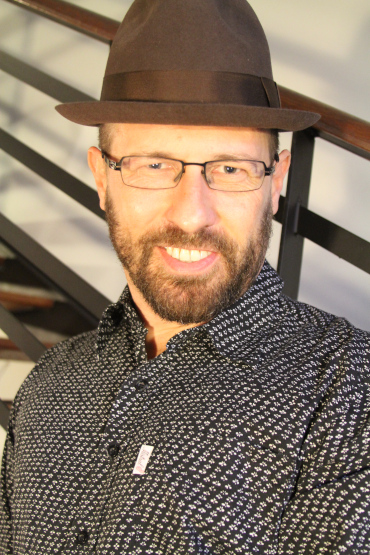 Evatt Hawkes is a Professor at the University of New South Wales, Sydney (UNSW). His group applies high fidelity computational fluid dynamics models to turbulent, reacting flows that underpin the performance of combustion and solar energy systems. His work at the nexus of big data and engineering applications is usually carried out with the aid of large-scale supercomputing resources with a view to making fundamental and practical advances in problems of industrial relevance in transportation, power generation, and other energy systems. Much of his work involves interaction with industry, with experimental researchers, and with international collaborators at universities and laboratories around the globe.
Prior to joining UNSW in 2007, Professor Hawkes graduated from University of Cambridge with a Ph.D. in 2001 and subsequently worked as a post-doc at the Combustion Research Facility of Sandia National Laboratories from 2002-2007. Professor Hawkes serves as Associate Editor of Proceedings of the Combustion Institute, as Advisory Editor of Flow, Turbulence and Combustion, and previously served as co-chair for the Turbulent Flames colloquium at the 36th International Symposium on Combustion. Professor Hawkes’ contributions and leadership in turbulent combustion modelling have been recognised most notably by the award of an Australian Research Council Future Fellowship in 2011, and in 2018 by his election as one of the inaugural class of Fellows of the Combustion Institute.
Evatt Hawkes is a Professor at the University of New South Wales, Sydney (UNSW). His group applies high fidelity computational fluid dynamics models to turbulent, reacting flows that underpin the performance of combustion and solar energy systems. His work at the nexus of big data and engineering applications is usually carried out with the aid of large-scale supercomputing resources with a view to making fundamental and practical advances in problems of industrial relevance in transportation, power generation, and other energy systems. Much of his work involves interaction with industry, with experimental researchers, and with international collaborators at universities and laboratories around the globe.
Prior to joining UNSW in 2007, Professor Hawkes graduated from University of Cambridge with a Ph.D. in 2001 and subsequently worked as a post-doc at the Combustion Research Facility of Sandia National Laboratories from 2002-2007. Professor Hawkes serves as Associate Editor of Proceedings of the Combustion Institute, as Advisory Editor of Flow, Turbulence and Combustion, and previously served as co-chair for the Turbulent Flames colloquium at the 36th International Symposium on Combustion. Professor Hawkes’ contributions and leadership in turbulent combustion modelling have been recognised most notably by the award of an Australian Research Council Future Fellowship in 2011, and in 2018 by his election as one of the inaugural class of Fellows of the Combustion Institute.